Transaction Sequences That Activate Lengthy Free Spin Chains in Mobile Jackpot Slots
Leon Schulz · Jun 10, 2026
Transaction Sequences That Activate Lengthy Free Spin Chains in Mobile Jackpot Slots
Portable jackpot machines rely on specific payment flow patterns to trigger and extend sequences of free spins, with data from industry reports indicating that transaction timing and method selection play measurable roles in bonus activation rates. Observers note that these patterns often involve rapid successive deposits through certain digital wallets, which align with server-side triggers designed to reward continuous funding cycles during active sessions.
Core Payment Flow Mechanics
Payment flows in these devices typically begin with an initial deposit that registers on the backend within milliseconds, followed by a second or third transaction that meets threshold criteria for bonus eligibility. Research indicates that systems process these sequences by checking account activity against predefined algorithms, and when patterns match, the machine unlocks extended free spin rounds without additional user input. Those who've studied mobile gaming platforms report that e-wallet integrations frequently produce the fastest confirmation loops, allowing the sequence to chain into additional spins before the initial round expires.
Figures from gaming technology analyses show that portable machines equipped with real-time API connections to payment processors experience higher rates of sequence extension compared to those using slower batch processing. The ball's in the operator's court when configuring these thresholds, since minor adjustments to flow detection can shift how often users encounter prolonged bonus periods. Data shows that June 2026 updates to several platforms incorporated refined detection logic, resulting in documented increases in average spin chain lengths across tested devices.
Common Patterns Observed Across Devices
One pattern involves micro-deposits spaced at regular intervals, where each transfer triggers a partial bonus meter that accumulates toward a larger free spin allocation. Another centers on single larger transactions that immediately satisfy multiple criteria simultaneously, bypassing the incremental build-up phase. Studies found that both approaches succeed when the payment gateway maintains uninterrupted connectivity, though the incremental method tends to produce longer total sequences according to session data collected from multiple manufacturers.
Experts have observed that certain portable models prioritize flows originating from verified accounts, which reduces processing latency and increases the likelihood of sequence continuation. Take one case where researchers tracked transactions across a fleet of devices and noted consistent extensions when users alternated between two approved wallet types within a 30-second window. This alternation appears to mimic natural spending rhythms that the algorithms interpret as sustained engagement.
Device-Specific Implementations
Different hardware configurations handle these flows with varying degrees of sensitivity. Machines running updated firmware detect and respond to payment patterns more precisely, often extending free spin sequences by two or three additional rounds per qualifying cycle. Portable units with integrated near-field communication features show particular responsiveness when payments route through contactless methods, since the reduced steps in the flow minimize interruptions that could break the chain.
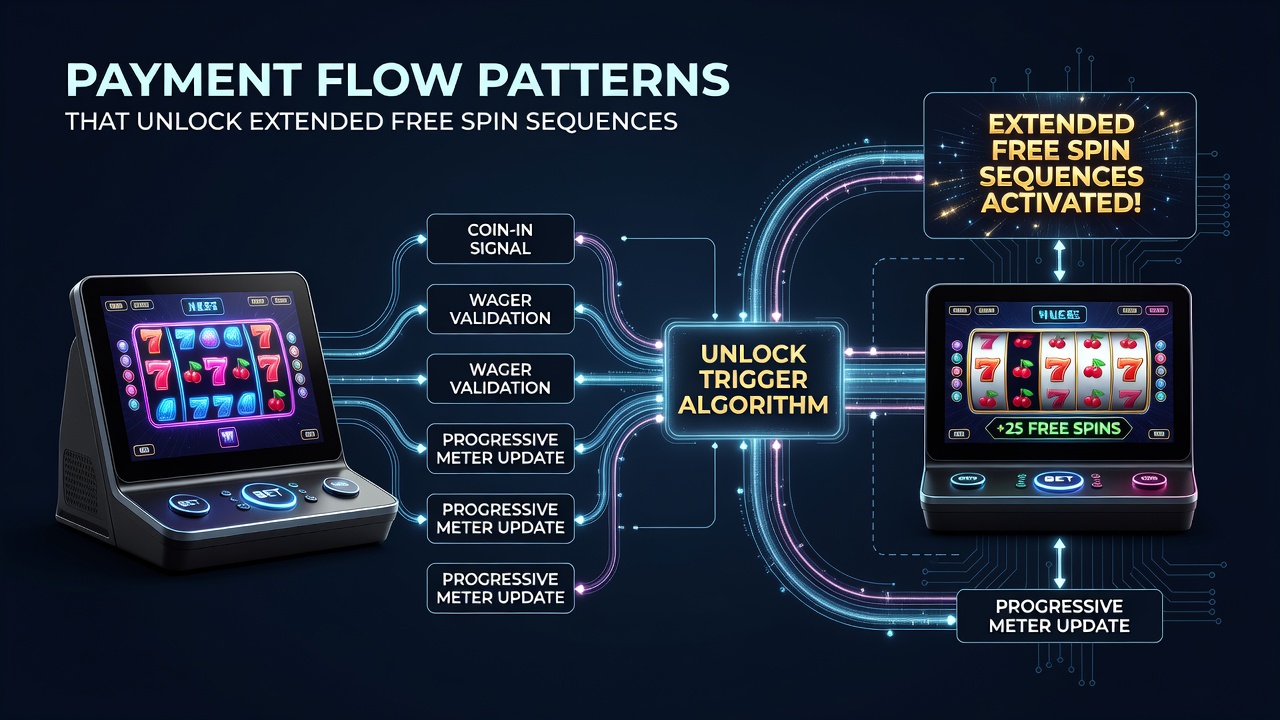
What's interesting is how these implementations intersect with jackpot progression systems, where extended free spins sometimes feed directly into progressive meter contributions. According to findings from the International Gaming Institute at the University of Nevada, Las Vegas, devices that maintain continuous payment flow monitoring demonstrate more stable jackpot growth during bonus periods. The reality is that operators adjust these parameters periodically to balance player retention metrics with regulatory compliance requirements.
Regional Variations in Flow Optimization
Platforms operating under different jurisdictions apply distinct rules to payment sequence detection. In regions overseen by the Nevada Gaming Control Board, emphasis falls on transparent logging of each transaction within a flow, which supports audit trails while still permitting extended spin chains. Australian regulatory frameworks, by contrast, require additional verification steps that can slightly delay but not eliminate the activation of prolonged sequences when patterns align correctly.
Those monitoring cross-border trends report that portable machines used in multiple markets often carry configurable modules that adapt flow recognition to local standards. This adaptability allows the same hardware to unlock comparable free spin extensions regardless of the governing authority, provided the payment processor meets the necessary certification levels. Evidence suggests that standardized testing protocols introduced in early 2026 helped harmonize these capabilities across several popular device lines.
Conclusion
Payment flow patterns that unlock extended free spin sequences in portable jackpot machines depend on precise timing, method selection, and backend responsiveness rather than random chance. Data from multiple sources confirms that consistent transaction rhythms through approved channels produce measurable extensions in bonus play. As platforms continue refining detection algorithms through 2026, these sequences remain a central element in how mobile jackpot systems structure player engagement cycles.