Gibraltar Commissioner Andrew Lyman Flags Risks from UK Gambling Tax Hike and Strict Safeguards Pushing Operators Offshore
Petra Keller · Mar 20, 2026

Gibraltar Commissioner Andrew Lyman Flags Risks from UK Gambling Tax Hike and Strict Safeguards Pushing Operators Offshore
The Alert from Gibraltar's Top Regulator
Andrew Lyman, Gibraltar's gambling commissioner, recently issued a stark warning about the United Kingdom's upcoming regulatory shifts, pointing out how a planned 40% tax on remote gaming duty set for April 1, 2026, combined with stringent player protection measures, could force licensed operators to flee the market; instead, these firms might turn to unregulated offshore platforms that offer fewer consumer protections. He delivered this message amid growing tensions in the European gambling sector, where jurisdictions like Gibraltar have long hosted major online operators serving UK players, and now face the prospect of upheaval as London tightens its grip.
What's interesting here is how Lyman's comments cut straight to the chase, highlighting not just immediate financial pressures but also longer-term threats to jobs and investment in an industry that's become a cornerstone for the UK economy, particularly in online casinos and remote betting. According to details shared in his public statement, the tax leap from previous levels represents a dramatic escalation, one that operators simply can't absorb without rethinking their entire business models; meanwhile, universal player protection rules, while well-intentioned, blanket everyone rather than zeroing in on those truly at risk.
Take Gibraltar's vantage point: as a key hub for iGaming licenses, the territory has watched UK policies evolve for years, and Lyman argues that the current trajectory risks unraveling partnerships built over decades, sending revenue streams scattering to less regulated corners of the world.
Unpacking the UK's Regulatory Overhaul
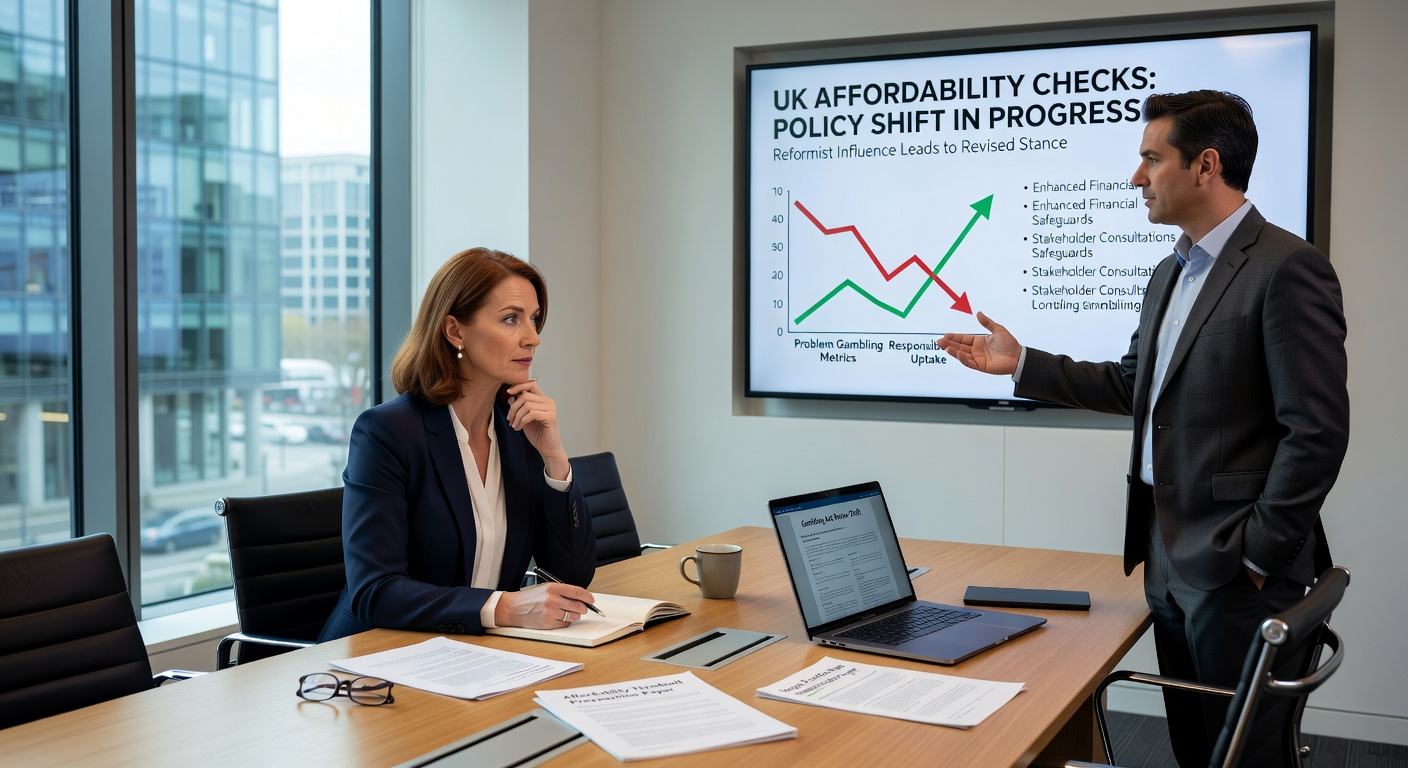
The changes Lyman references stem from broader reforms aimed at reshaping online gambling, with teh remote gaming duty tax hike leading the charge come April 2026; this follows consultations and white papers that have operators on edge, as the effective rate climbs to 40% on gross gaming yield from remote activities, hitting online casinos hardest since they generate substantial remote revenue. But here's the thing: alongside the tax, player protection rules introduce friction points like mandatory affordability checks, stake limits on slots, and enhanced verification processes, all designed to curb problem gambling yet potentially stifling legitimate play.
Observers note that these measures, while echoing efforts in places like Ontario where the Alcohol and Gaming Commission of Ontario has implemented similar tiered safeguards, go further in the UK by applying broadly without much nuance, which Lyman sees as a misstep. Data from industry trackers shows remote gaming already contributes billions to UK coffers, so a 40% bite could slash margins, prompting firms to relocate licenses to friendlier spots like Malta or the Isle of Man.
And as March 2026 approaches with final rules solidifying, licensed operators grapple with uncertainty, weighing compliance costs against the allure of offshore havens that dodge these burdens entirely; that's where the rubber meets the road for businesses balancing profitability and player safety.
Lyman's Call for a Balanced Path Forward
Rather than blanket restrictions, Lyman advocates a smarter strategy that leans on individual responsibility while laser-focusing interventions on high-risk behaviors; he points to evidence suggesting that tailored measures, like those piloted in Australia under the Australian Communications and Media Authority, prove more effective at protecting vulnerable players without alienating the majority. Studies from the European Casino Association back this up, revealing how overly prescriptive rules correlate with market contraction in jurisdictions applying them rigidly.
People who've studied these dynamics often discover that emphasizing education and self-exclusion tools empowers consumers, much like voluntary programs in Nevada overseen by the state's gaming control board, where operators thrive alongside robust safeguards; Lyman stresses this approach could preserve the UK's competitive edge, keeping innovation alive in online casinos that blend slots, live dealers, and progressive jackpots.
Turns out, universal caps and checks, while curbing excesses, also throttle casual engagement, leading to frustrated players seeking alternatives; Lyman's pitch underscores how Gibraltar's model, with its emphasis on operator accountability and targeted oversight, has sustained a thriving ecosystem for years.
Potential Fallout: Jobs, Investment, and Market Shifts
Job losses loom large in Lyman's forecast, as operators contemplate exodus; the UK gambling sector employs tens of thousands, with online arms alone supporting tech roles, marketing teams, and compliance staff, all at risk if firms bolt for offshore bases where taxes hover far lower. Reduced investment follows suit, since who pours capital into a high-tax, high-scrutiny environment when lighter regimes beckon, potentially stunting upgrades to mobile platforms, live casino streams, and jackpot systems that define modern play.
Long-term damage to the industry paints a grim picture too: licensed platforms, bound by UK standards, lose ground to unregulated sites lacking age verification or fair play guarantees, exposing consumers to scams and addiction without recourse; one case from recent years involved offshore operators vacuuming up UK traffic post-similar tax tweaks elsewhere, as reports from the International Betting Integrity Association indicate. Figures reveal the UK online casino market, worth billions in gross gaming yield, could shrink by double digits if migrations accelerate.
So with April 2026 ticking closer, and March bringing final implementation details, stakeholders watch nervously; experts who've tracked these patterns observe that once operators shift licenses, reversing course proves tough, as rebuilding trust and infrastructure takes years.
Industry Echoes and Gibraltar's Stake
Gibraltar, home to over a dozen major operators, stands particularly vulnerable since many hold dual licenses to serve UK customers; Lyman's voice carries weight because his jurisdiction enforces high standards, partnering closely with European bodies to combat illicit play. Those in the know highlight how his warning aligns with murmurs from trade groups, where executives quietly model scenarios showing 20-30% revenue drops under the new duty, prompting boardroom debates on relocation.
It's noteworthy that Lyman's remarks, detailed in a recent GamblingNews report, come at a pivotal moment, urging policymakers to recalibrate before lines are drawn in the sand. Researchers examining cross-border gambling flows note similar outflows happened in Sweden after 2019 reforms, where tax pressures chased firms to Malta, underscoring the pattern Lyman fears.
Yet amid the caution, glimmers of dialogue persist, with calls for stakeholder forums to hash out compromises that safeguard players without gutting the market; that's the ball in policymakers' court as 2026 nears.
Looking Ahead: Implications for Players and Operators
As the dust settles on these warnings, the UK gambling landscape braces for transformation, with licensed online casinos potentially thinning out while offshore shadows lengthen; Lyman's blueprint offers a counterpoint, blending responsibility with flexibility to sustain a vibrant sector. Data indicates balanced regimes retain operators longest, fostering innovation in free spins, live roulette, and jackpot pursuits that keep players engaged safely.
In the end, the path chosen will ripple across Europe, influencing how jurisdictions like Gibraltar adapt; observers predict that if overreach prevails, consumers bear the brunt, chasing thrills on unregulated shores with safeguards nowhere in sight. But should nuance win the day, the industry endures, jobs hold steady, and investments flow, proving once more that targeted protection trumps one-size-fits-all every time.